

If you need to leave Kuwait soon, you can confirm any active travel ban in minutes through official e-services. The fastest options are the Sahel app (Ministry of Justice service), the Ministry of Justice website (Travel Ban Inquiry/Payment), and the Ministry of Interior “Personal Inquiry” portal using your Civil ID.
Do this next
- Open Sahel → Services → Ministry of Justice → Travel Ban Inquiry.
- If a ban appears, tap details to see the case and payment options.
- No Sahel? Use the MOJ website’s “Payment of Travel Ban Orders,” or MOI “Personal Inquiry.”
What a travel ban is
Legal hold on exiting Kuwait
A travel ban is a court- or prosecution-ordered restriction that prevents departure until the underlying matter is resolved.

Common issuing authorities
Bans are typically recorded by the Ministry of Justice (MOJ) or Kuwaiti Public Prosecution and enforced at borders by the Ministry of Interior (MOI).
Typical triggers
Financial claims, active court cases, criminal investigations, and some family law matters can result in a ban.
Not the same as an immigration overstay
Visa or residency violations can lead to separate penalties; some cases may also include a travel ban until cleared.
Ways to do a kuwait travel ban check
Sahel app: quickest consolidated view
- Open Sahel and sign in (approve via My Identity if prompted).
- Tap Services (bottom bar).
- Choose Ministry of Justice.
- Tap Travel Ban Inquiry.
- Enter your Civil ID if asked, then submit.
- View results: any active bans will show with case number, issuing authority, and amount/status.
- Tap a case to see details and available payment/settlement options.

If you pay/settle, save the receipt, then re-check the inquiry to confirm the update.
Ministry of Justice website: inquiry + payment
Use MOJ’s Payment of Travel Ban Orders service with your Civil ID and email to view outstanding bans and settle eligible financial orders.

Ministry of Interior portal: personal inquiry
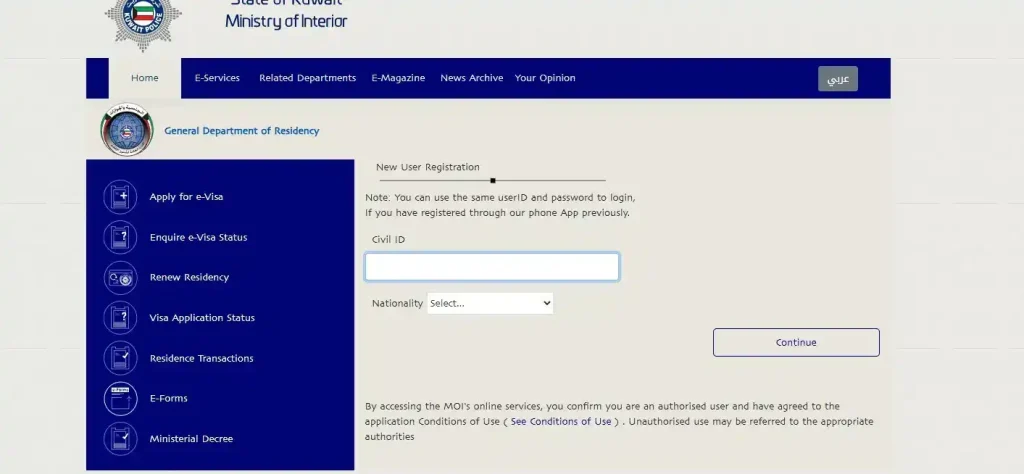
Register or sign in to MOI’s e-portal → Personal Inquiry to view holds connected to your profile, including travel restrictions and other flags.
“My Identity” (Metrash-style) login flow
Some services require authentication via Kuwait’s My Identity app. Keep your Civil ID and mobile number handy for OTP/verification.
Step-by-step: check and clear a travel ban
1) Confirm your status
Use Sahel or MOJ website to check for an active ban and note the case number, issuing body, and reason.
2) Identify the path to lift it
If it’s a financial claim, the MOJ portal often supports online settlement or deposit. For criminal/prosecution holds, contact the listed authority or legal counsel.
3) Complete the action and get proof
Pay the due amount or obtain the court/prosecution release order. Keep digital/printed payment receipts or clearance documents.
4) Verify removal before you go to the airport
Re-check Sahel/MOJ a few hours or next business day after clearing. Only travel once the ban no longer appears.

Reasons you might see a ban
| Reason (summary) | Typical authority | What usually clears it |
|---|---|---|
| Unpaid judgment / civil debt | MOJ / Enforcement | Pay full amount, court-approved settlement, or deposit |
| Active court case | MOJ / Courts | Court decision lifting the hold or settlement recorded |
| Criminal investigation | Public Prosecution | Prosecutor’s lift order after conditions met |
| Family law (alimony/custody) | Personal Status Court | Payment plan, court order, or settlement |
| Visa/residency violations | MOI | Fines/regularization; clearance from MOI if ban applied |
How long does it take after payment or clearance?
Recording the action
Online payments reflect quickly; court or prosecution releases depend on case processing.
System sync to borders
Most updates propagate the same day or within the next business day. Always re-check digitally before heading to the airport.
Urgent travel?
Carry receipts and the release order. They don’t guarantee departure if systems haven’t synced, but they help if you need to follow up.
What to do if your name matches someone else
Mismatched identity happens
If your name is common, a ban might appear due to similar details.
Use full identifiers
Always verify with Civil ID, case number, and (if shown) date of birth.
Escalate correctly
Visit the indicated office (MOJ/MOI) with documents to correct or disambiguate your record.
Costs, payments, and refunds
| Item | Where it appears | Notes |
|---|---|---|
| Judgment amount / claim | MOJ enforcement record | Pay in full or approved installment/deposit (if offered) |
| Service/processing fees | On MOJ payment page | Shown before you confirm |
| Refunds for reversed cases | Court/treasury | Based on court directives; processing times vary |
Documents and details you’ll usually need
Identification
Civil ID (front/back), passport details.
Case references
Case number, issuing court/prosecution office, and any notices you’ve received.
Contact & email
Needed to receive payment receipts and notifications from portals.
Pro Tip: Plan to re-check your status the day before your flight. If you’ve just paid or got a release, take screenshots of the clearance screen in Sahel/MOJ and carry printed receipts—handy if you need to verify at the airport.
FAQs
How can I check if I have a travel ban in Kuwait?
Use the Sahel app’s Ministry of Justice → Travel Ban Inquiry, the MOJ website under Payment of Travel Ban Orders, or the MOI portal’s Personal Inquiry with your Civil ID. These show active bans, case details, and in some cases payment options.
How long to lift a travel ban after I pay?
For financial claims paid online, many users see updates the same or next business day once the payment posts and the case is marked satisfied. Court or prosecution releases may take longer. Always re-check digitally before traveling.
Can I leave Kuwait while a travel ban is active?
No. You’ll be stopped at exit control until the ban is officially lifted and reflected in the system. Clear the underlying cause, obtain the release, and verify removal in Sahel/MOJ before you go.
Who issues travel bans in Kuwait?
Bans are generally issued by courts under the Ministry of Justice or by the Kuwaiti Public Prosecution, with enforcement at borders by the Ministry of Interior.

